
International Association of Catholic Bioethics
12th Biannual Colloquium ■ 19-23 June 2026
Wise Decisions:
The place of love in AI-informed health care


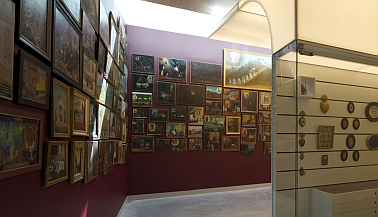
Held at the Sanctuaire Notre Dame de Grace retreat center
in Rochefort-du-Gard (near Avignon), France
Organized in cooperation with the
Château Saint André Center for Ethics and Integrity, SAS
Saint André d’Olérargues, France
Background information on the Colloqium theme
It remains to be seen exactly what AI will be able to facilitate in the area of health care. However, it is already clear that its impact is likely to be limited. Some aspects of the provision of health care, and of the decisions made by patients and their caregivers, cannot – or should not – be left to AI. While factual information is a necessary condition of decision making – and AI is good at gathering facts – facts themselves carry only limited meaning : they certainly do not reveal objective values. As the recent COVID-19 pandemic underscored, a quantitative/statistical focus on “data” about, for example, infection rates and their prevention can lead to a failure to pay attention to other important aspects of human health and flourishing.
To articulate meaning and value requires a focus on various dimensions of health care, particularly those that are relational, which are not amenable to the tools of AI. To understand and nurture relationships between patients and their caregivers, which are complex and irreducible to quantifiable data, we need to unpack the “logos” that shapes these relationships. This logos has cognitive elements, but also affective, and conative dimensions involves feeling, empathy, motivation, and even love.
In its 11th Colloquium, held in Georgetown University in 2024, the IACB embarked on an exploration of the connections between love and bioethical reflection. The dramatic expansion of AI in ever more domains of public life, including health care, and the apparent inability of experts in either AI or health care to predict (and guide) its impact on the science, provision, and organization of health care, requires bioethicists to explicate those meaningful and valuable aspects of the therapeutic relationship that risk, intentionally or unintentionally, being squeezed out by developments in AI.
General Program
The Colloquium will begin with an opening program on Friday afternoon, June 19, 2026. The Colloquium will then run through the next 3 days with shared meals among participants throughout. We will conclude our program on Tuesday morning 23/6 after breakfast. Interspersed with the academic sessions will be various excursions to relevant cultural sites in the area.
Active participation
The success of the IACB Colloquia is primarily due to the active participation by and ongoing exchanges among all attendees about the Colloquium theme throughout our days together. In order to foster this process of active exchange, we hope Colloquoium participants will volunteer prepare a paper or a commentary (more on these options below), or to serve as a session moderator. The registration form will enable you to let us know if you are able to undertake one of these roles.
(1) Papers prepared in advance by attendees. We invite attendees to prepare a paper on the Colloquium theme (for a list of topical suggestions, see the next section). Papers should be written out and submitted no later than 4 weeks prior to the start of the Colloquium (that is, by 19 May 2026). They will then be distributed among all attendees with the expectation that everybody will have read all papers prior to arrival. This will allow us to immediately delve into a discussion of the submitted papers once we convene in Rochefort-du-Gard. In other words, the authors will not be expected to present their papers at the conference.
The papers need to be written out in full by 19 May 2026, but they can be short (as short as 2 or 3 pages), provided they contain sufficient ideas and arguments to jump-start the discussion. They do not need to be of publishable quality, but can be in draft form. And there is no prescribed type either: Papers can range from a conceptual analysis to a clinical case study, and from a policy review to a personal reflection.
(2) Commentaries on submitted papers. As mentioned above, submitted papers will be distribited among all attendees with the expectation they be read prior to the Colloquium. The authors will not be asked to present their papers at the Colloquium. Instead, for each paper one or two other attendees will be asked to study one paper in greater depth and prepare a short commentary, to be presented at the Colloquium.
The commentary shall be short (5-7 minutes), highlight key ideas in the paper, point out some arguentative voids or counterpoints, and raise some questions for further discussion. Following this commentary, the remainder of the session will be devoted to a discussion of the paper.
Subthemes for individual papers
As already exmplain in the Background section above, the 2026 Colloquium is intended to explore which important goods and values are at risk of being constrained or even lost as AI will play an ever greater role in all domains of health care, and what strategies shall be adopted to sustain them.
The list of subthemes provided below is not intended to be restrictive, but rather to spark creative thinking about the main theme of the Colloquium.
- Experiences with AI. It will be important to not merely speculate about the impact of AI on the care of patients, but to accurately capture its real impact. Is there any actual evidence that AI, its benefits notwithstanding, is already constraining important affective and conative dimensions such as feeling, empathy, motivation, and love?
- Wise and loving deciding and acting: Assuming that caring lovingly is important in health care, how does this follow from deciding wisely, guided by a method that is open to the influences of loving? How does love call for fundamental transformations in the ways we now typically approach bioethical decision-making, and what are the biases and oversights in knowing and deciding that AI might be reinforcing?
- Philosophical and theological resources: Aristotle draws on the decision making of a good doctor to convey his view of the decision making of a good person. Can philosophers and theologians, ancient or modern, help us to articulate and defend the idea that love, properly understood, is the sine qua non of all good healthcare decision-making? If so, what light do their ideas shed on data-based algorithms as the basis for healthcare decisions?
- AI and virtue bioethics: Ethics in the virtue ethics tradition is concerned with developing practical wisdom (phronesis, prudentia). What is the place of love in developing practical wisdom? Can AI engage in forms of reasoning, such as abductive reasoning, that could be open to the inspirations and motivations of love?
- Autobiographical nature of bioethical deciding: Can we say that AI or ‘machine intelligence’ has a history but not an autobiography nor an ethos? While AI can supplement human capabilities in answering questions of mere fact, can it ever mimic or replace human capabilities in answering questions of moral facts? Can AI develop morally?
- Respecting patients as persons. AI has the potential to contribute toward the further depersonalization of patients by reducing them to a series of data-points processed on a statistical level by AI algorithms. Yet, AI may also assist health care providers by taking over certain tasks that would allow them to devote greater time and attention to their patients’ needs, not only medical but also psychosocial and spiritual. How can we successfully integrate AI into health care in ways that will promote, and not undermine, respect for the individual personhood and dignity of each patient?
- Fostering a culture of encounter. Pope Francis repeatedly called for the cultivation of a “culture of encounter” between persons instead of relying merely on technocratic solutions to societal issues such as the plight of the poor, climate change, and an evident breakdown in civic concordance and social solidarity. The “technocratic paradigm” has arguably reached its zenith with the rapacious assimilation human-generated data into AI algorithms. Given the risk of increasing reliance on AI to disrupt interpersonal relationships or to provide a panacea for the lack of such relationships (as witnessed in the “loneliness epidemic”), how can we direct the utilization of AI toward ends that help foster a culture of encounter?
- Medical education. Pope Francis has distinguished knowledge, in the form of mere data accumulation and algorithmic manipulation, and wisdom, which directs the use of data and technology toward a more “integral humanism.” While many are rightly concerned about the potential for AI use leading to “deskilling,” particular among health care providers, a more urgent threat to integral humanism is the loss of the capacity to cultivate and employ both theoretical and practical wisdom. Can AI facilitate the cultivation of wisdom in the formation of health care providers or should its utilization in medical education be significantly limited?
- Legal standards of practice. Since the generation of new biomedical knowledge already outpaces anybody’s ability to acquire such knowledge, a process which will dramatically increase as a result of AI, one can reasonably expect that any component of the diagnostic, prognostic and even therapeutic decision making process that is primarily knowledge-based will be driven by AI. This may impact public expectations vis-à-vis the legally enforced standards of medical care, compelling reliance on AI. It is already difficult to capture in legal language all components of a truly good therapeutic relationship. Will the dominance of AI render this even more challenging?
- Opportunities. The same process of AI taking over all knowledge-based components of biomedical sciences and health care practice could also generate a lot of opportunities for other important aspects of the therapeutic relationship to be strengthened. After all, if health sciences education no longer has to reserve 95% of curricular time to the acquisition of biomedical knowedge and clinical know-how, leaving most of that to AI, it should be possible to provide future genations of health care providers with much more competencies in these other aspects. How will/should health sciences education change?
- Long-term impact. There is already widespread awareness, that for all of its immediate benefits, AI poses urgent dangers to individuals and communities. But as we allow AI to shape so much of what we know, what we do and what we value, will it fundamentally change the way we think about, provide and enjoy health care in the long run?
Submission instructions
Abstracts for papers can be submitted and will be reviewed on a rolling basis. The review committee will seek to review each submission within three weeks. The review process will begin on January 1, 2026. The final deadline for submission of abstracts is April 1, 2026.
The submission should minimally include a title and abstract (300 words max). An outline or even a draft paper may also be submitted along with the title and abstract. For co-authored papers, please identify the corresponding author.
Email your submission to info[[at]]chateausaintrandre.center, with in the subject line the words: “Abstract IACB2026”.
Preliminary program
| June | Morning | Afternoon | Evening |
| Fri 19 | – | 15:30 Welcome Papers | Welcome dinner Optional visit to Pont-du-Gard |
| Sat 20 | Papers | Papers Mass celebrated with Mgr. Brouwet, Bishop of Nîmes | Discussion in the gardens Optional visit to Pont-du-Gard |
| Sun 21 | Papers | Cultural outing | Dinner on your own |
| Mon 22 | Papers | Work on meeting proceedings, incl. recommednations Visit of the Ex Voto museum at the retreat center | Final conference dinner Optional visit to Pont-du-Gard |
| Tue 23 | Departure after breakfast |
Meeting location and travel
The Colloquium will be held at the Notre Dame de Grace Retreat Center, located in Rochefort-du-Gard, 15 minutes west of Avignon. The staff of the Chateau Saint Andre Center will pick up each participant on Friday June 19 in Avignon to be taken to the symposium site.
You will be picked up at one of three locations:
- The Avignon TGV train station. This is where the direct high speed trains from the Paris CDG airport arrive and from the Gare the Lyon train station in Paris downtown. It is also where direct daily trains from several other major cities arrive (incl. Lille, Lyon, Brussels, Frankfurt, Geneva, Barcelona, Madrid).
- The Avignon Centre train station. As the name indicates, this station is located in the center of Avignon, just outside the medieval city walls. Some trains from downtown Paris arrive at this station, as well as trains from the Marseille airport and from the Nice airport.
- Your downtown Avignon hotel/B&B. If anybody elects to spend extra days before the start of the symposium in Avignon to explore the city and any additional highlights in the area, you will be picked up there (or as close as we can come by car).
French intercontinental airports include Paris CDG, Nice, Lyon (only Canada, Africa and Asia), and Marseille (only Canada and Africa). All of these airports also have direct connections to other major airports in Europe as well as the Middle East. We will be providing you by email with more detailed information about travel to the conference site.
If you are coming by train, book your train tickets early. You may not be able to book until 3 months before your travel, but do not wait until a week before since French trains do fill up, particularly in the summer.
Should you desire to rent a car, the Avignon TGV station has offices of all major car rental companies.
The staff of the Chateau Saint Andre Center will send some more travel info (particularly about train connections) by email, and assist you with you particular travel plans. Please email to info[[at]]chateausaintandre.center to discuss your travel plans.
Lodging options
The retreat center where the Colloquium will be held has 26 guest bedrooms available. A few are single rooms, most are set up as double rooms, and some can accommodate three or more guests. Please note that these bedrooms are located in the old abbey dormitory wings and still reflect the simplicity of monastic life. However, each room nowadays has its own bathroom with a sink and shower. Some rooms also have a toilet in the private bathroom. There is no airconditioning, but small fans are provided. There is no daily room service, but linens and towels are provided (including a fresh set as needed). Soap, shampoo, toothpaste and a limited number of hair dryers will also be be made available, as well as converter plugs to French outlets.
For those seeking more comfort, please see the list below of some nearby hotels and a several rentable vacation homes and B&B’s in the area. In fact, by searching booking.dom or AIRBNB still more vacation apartments can be found.
For those who are coming by or renting a car, the lodging options are of course even greater. Rochefort-du-Gard is located centrally between the cities of Avignon (20 min by car), Uzès (25 min), and Nîmes (35 min), with many other beautiful villages even closer by. The mediterranean beaches are 55 min away.
Hotel le Lagon **
Description: 60 comfortable rooms with en suite bathrooms, individual WCs, TV, free wifi and air conditioning. It offers breakfast and has a swimming pool.
Location: The hotel is located in the modern section of the village of Rocheford-du-Gard, about 6 km from the old part where the colloquium will take place.
Address: Rue de la Bégude, 30650 ROCHEFORT-DU-GARD
Website: https://www.hotellelagon.fr/en
Phone: +33 4 90 25 41 54
Hotel Lemon **
Description: Budget hotel
Location: The hotel is located in the modern section of the village of Rocheford-du-Gard, about 6 km from the old part where the colloquium will take place.
Address: Rue de la Bégude, 30650 ROCHEFORT-DU-GARD
Website: Can be booked via booking,com
Phone: +33 4 90 25 41 54
Hôtel La Fenouillere ***
Description: Family friendly hotel, with airconditioning, onsite restaurant and large swimming pool
Location: The hotel is located west of the old village of Rocheford-du-Gard, about 7.4 km from the location where the colloquium will take place.
Address: 247 chemin de la fenouillère, 30390 ESTEZARGUES
Website: https://all.accor.com/booking/fr/accor/hotel/B814
Les Hauts d’Avignon
Description: Villa Bellevue is a contemporary house designed for your vacations in the Gard region, offering five rooms, terrace, pool and jacuzzi. The guest rooms can be booked individually.
Location: The hotel is located on the edge of the old village of Rocheford-du-Gard, about 3.5 km from the location where the colloquium will take place.
Address: 882 Chem. de Bellevue, 30650 Rochefort-du-Gard
Website: https://leshautsdavignon.com/en/
Phone: +33 7 81 29 00 14 / +33 9 50 14 83 88
Villa Rochevida
Description: Vacation home, with five bedrooms and two bathrooms. The property features a lounge, family rooms, and a sun terrace, complemented by a saltwater swimming pool and a beautiful garden. Rooms cannot be rented separately.
Location: The villa is located on the western edge of the old village of Rocheford-du-Gard, about 3.2 km from the location where the colloquium will take place.
Address: 42 Impasse des Fortysias, 30650 Rochefort-du-Gard,
Website: Can be reserved via booking.com
Mas Jasmin
Description: Homestay B&B with use of hot tub, pool, shared kitchen, games room, and outdoor seating areas.
Location: The B&B is on the edge of the old village of Rocheford-du-Gard, about 3.2 km from the location where the colloquium will take place.
Address: 640 Chem. de Vayere, 30650 Rochefort-du-Gard
Website: http://www.mas-jasmin.com/contact.html
Phone: +33 4 90 92 59 47 / +33 6 26 42 56 08
Entre Avignon et Pont-du-Gard
Description: Homestay guest suite with use of pool
Location: The B&B is located just west of the old village of Rocheford-du-Gard, about 4.2 km from the location where the colloquium will take place.
Address: 44 Chemin de la Plaine, 30650 Rochefort-du-Gard
Website: Can be reserved via booking.com
Villa Madou
Description: Homestay B&B with use pool.
Location: The B&B is located just east of the old village of Rocheford-du-Gard, about 1.6 km by car or 20 minutes on foot from the location where the colloquium will take place.
Address: 324 Chem. Argassin et les Dames, 30650 Rochefort-du-Gard
Website: Can be reserved via booking.com
Maison Studio dans havre de paix
Description: Holiday home with one bedroom and a living room., with sun terrace and garden
Location: The home is between the old and the new parts of the town of Rocheford-du-Gard, about 3.4 south of the location where the colloquium will take place.
Address: 121 Chemin de Jolivet, 30650 Rochefort-du-Gard
Website: Can be reserved via booking.com
Fee schedule
Colloquium fee: Euro 560
This fee includes virtually all meals, all refreshments and two excursions, as well as transportation from Avignon (train station) to the retreat center and back again on the day of departure
Accompanying person fee: Euro 350
This fee includes the same items as regular registration, plus two additional half-day excursions
Accommodation at the retreat center: Euro 235 (based on single occpancy, incl. breakfast)
Accommodation fee for each additional person sharing a guest room at the retreat center: Euro 175 (including breakfast)
Stipends
A small number of modest financial stipends may come available for specific categories of financially challenged individuals. Those in need of such a stipend are invited to contact the IACB as soon as possible but no later than April 1., 2026.
Registration and payment
The registration process will take three consecutive steps:
- Complete the online registration form available here. This form can also be used to submit and abstract. You will receive confirmation whether space is still available within 72 hours.
- Pay the downpayment using the payment form, available here. Please do NOT submit this payment until after you have received confirmation that space is available. The downpayment is due 6 weeks after registration and cannot be reimbursed should you decide to cancel your registration. Receipt of the downpayment will guarantee your spot.
- Pay the balance of your registration fee (combined with, if applicable, your accommodation fee and accompanying person fee). Total payment is due by April 1., 2026.
The payment form can also be completed by somebody other than the registrant. There will be the option to pay via PayPal (which accepts most major credit cards; there is no need to set up a PayPal account) or via a regular wire transfer (best option for those attendees who have access to the European IBAN banking system).
Subsequent IAEE Conference in Amsterdam
The International Association for Education in Ethics (IAEE) will have its annual conference in Amsterdam, The Netherlands, starting Tuesday afternoon June 24. It is possible to travel by high speed train from Avignon (with one stop in either Paris or Brussels) following the end of the IACB Colloquium on June 23 and reach Amsterdam that same evening. Of course, the Amsterdam Schiphol Airport can be reached with a short flight from airports near Avignon as well. For more information on the IAEE conference, click here.
Additional information
For all questions about this colloquium, including suggestions about travel to the conference site, please use the contact button above or email to: info[[at]]chateausaintandre.center .